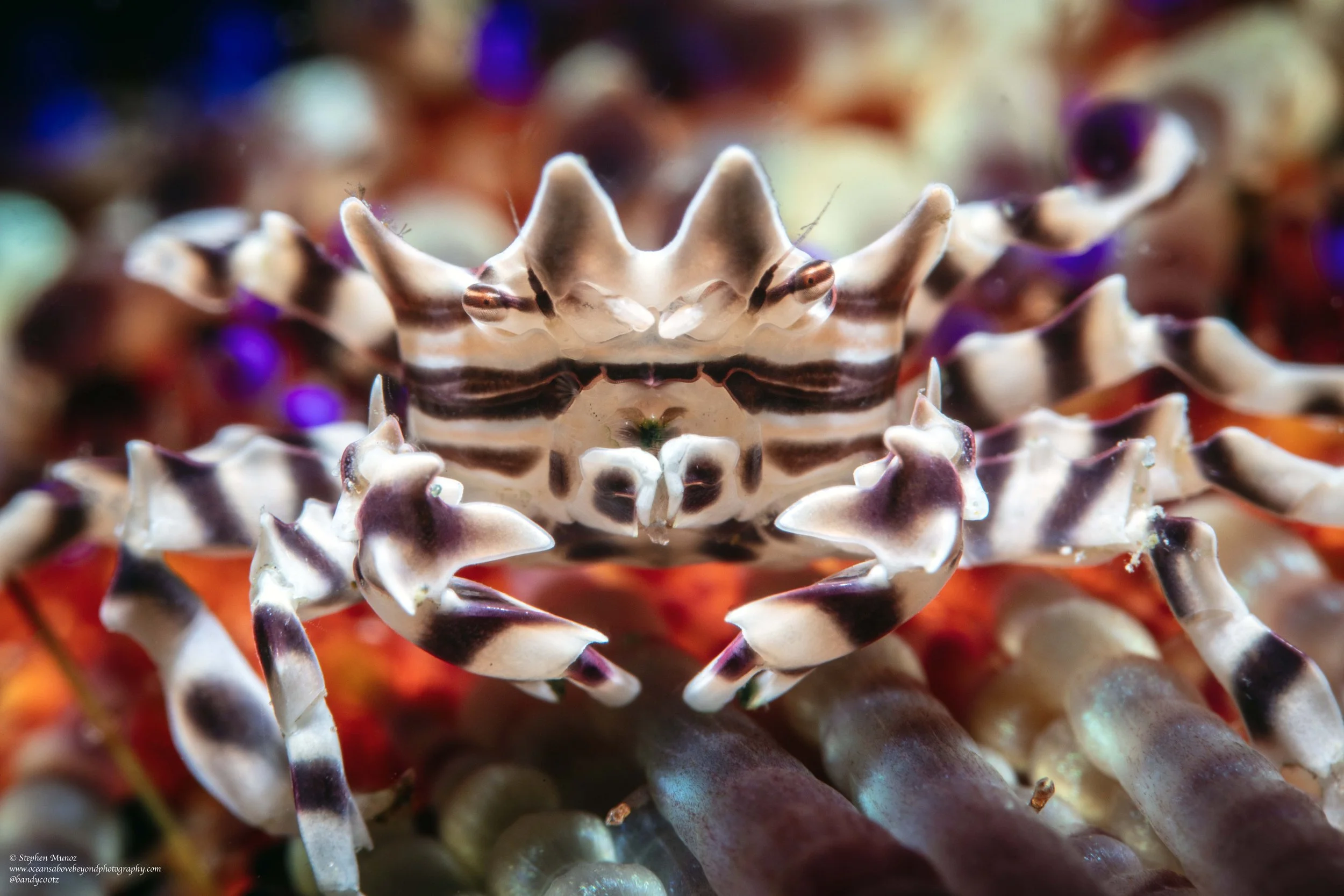
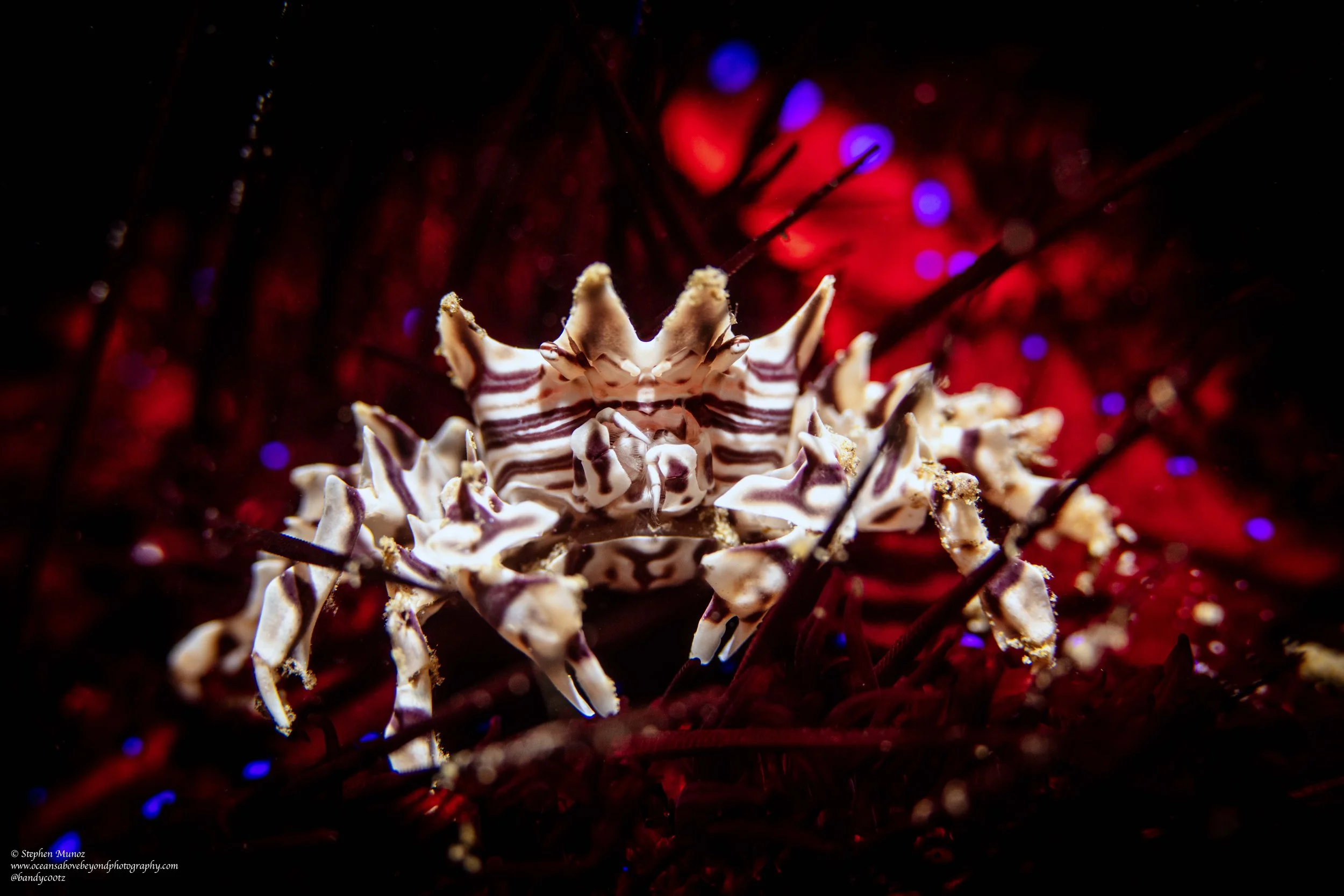
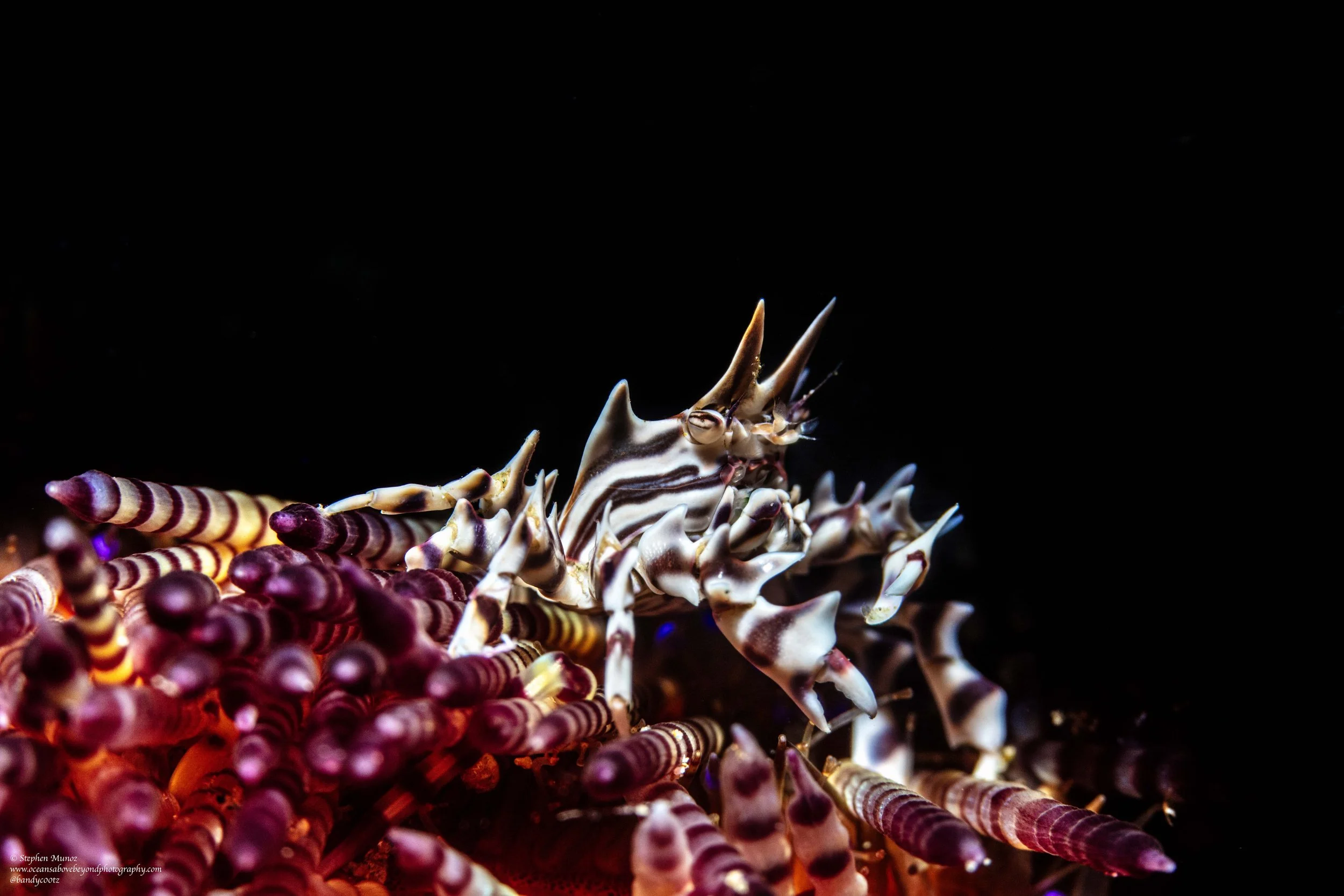
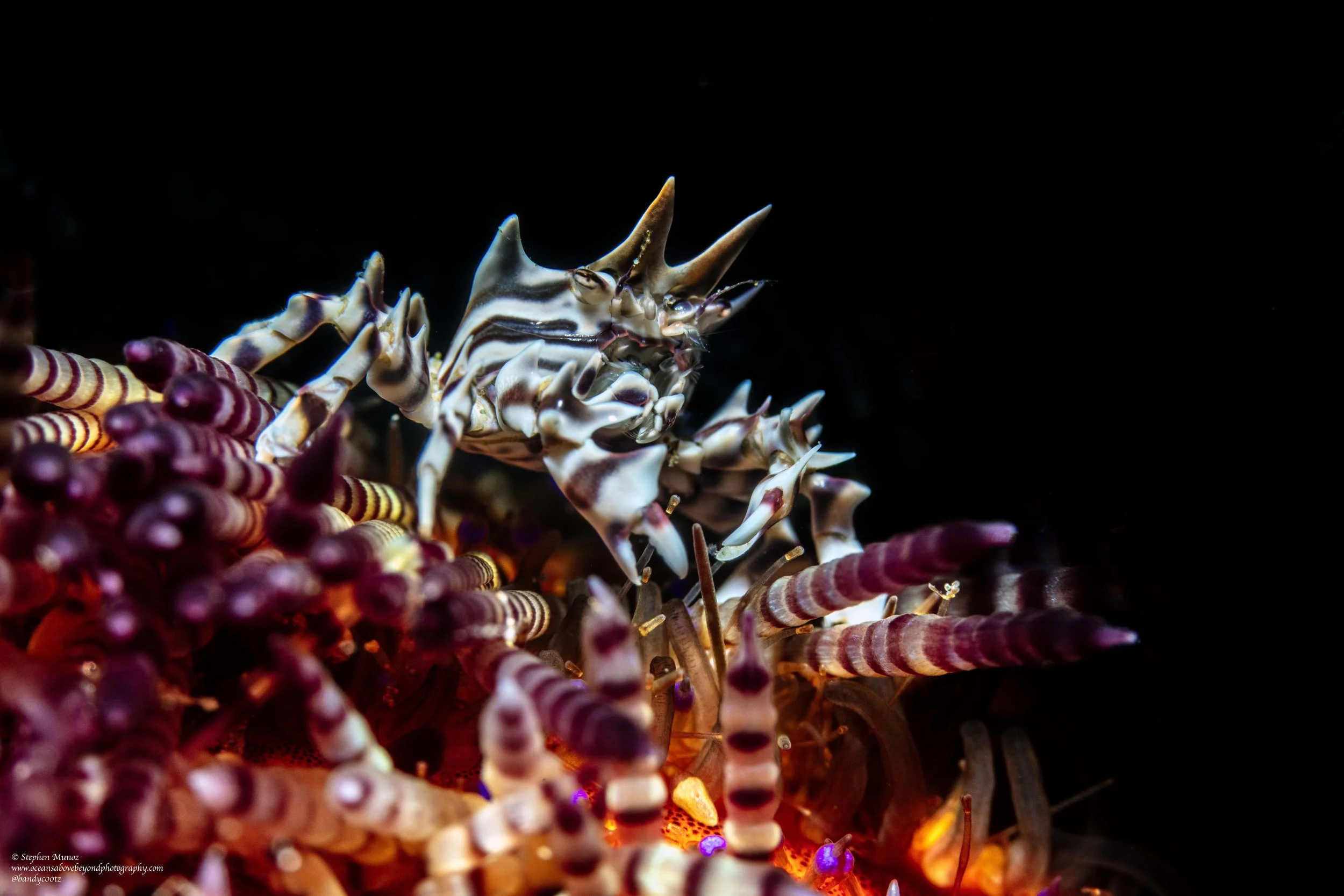
Zebra Urchin Crab
(Zebrida adamsii)

Zebra Urchin Crab (Zebrida adamsii)
Images taken at Lembeh, and Ambon, Indonesia
Smooth surface with minimal spines compared with many pilumnid crabs.
Carapace wider than long.
2. Distinctive Zebra Color Pattern
Bold alternating dark brown/black and white transverse bands across the carapace and legs.
The striping continues across chelipeds and walking legs, giving the species its common name.
This pattern also provides camouflage among sea urchin spines.
3. Specialized Walking Legs
Long, slender pereiopods adapted for moving between urchin spines.
Terminal segments have curved dactyli with gripping ability to hold onto spines.
4. Chelipeds (Claws)
Relatively small claws compared with many crabs.
Symmetrical and smooth with fine setae.
Used primarily for feeding on mucus, debris, or parasites on the host urchin.
5. Body Flattening
The crab is slightly dorsoventrally flattened, allowing it to move through dense urchin spines without being dislodged.
6. Eye and Orbital Features
Well-developed eye stalks.
Eye orbits relatively shallow and not heavily armed with spines.
7. Habitat
One of the most useful identification clues is its obligate association with sea urchins, particularly:
The crab usually sits between the spines or near the oral surface of the urchin.