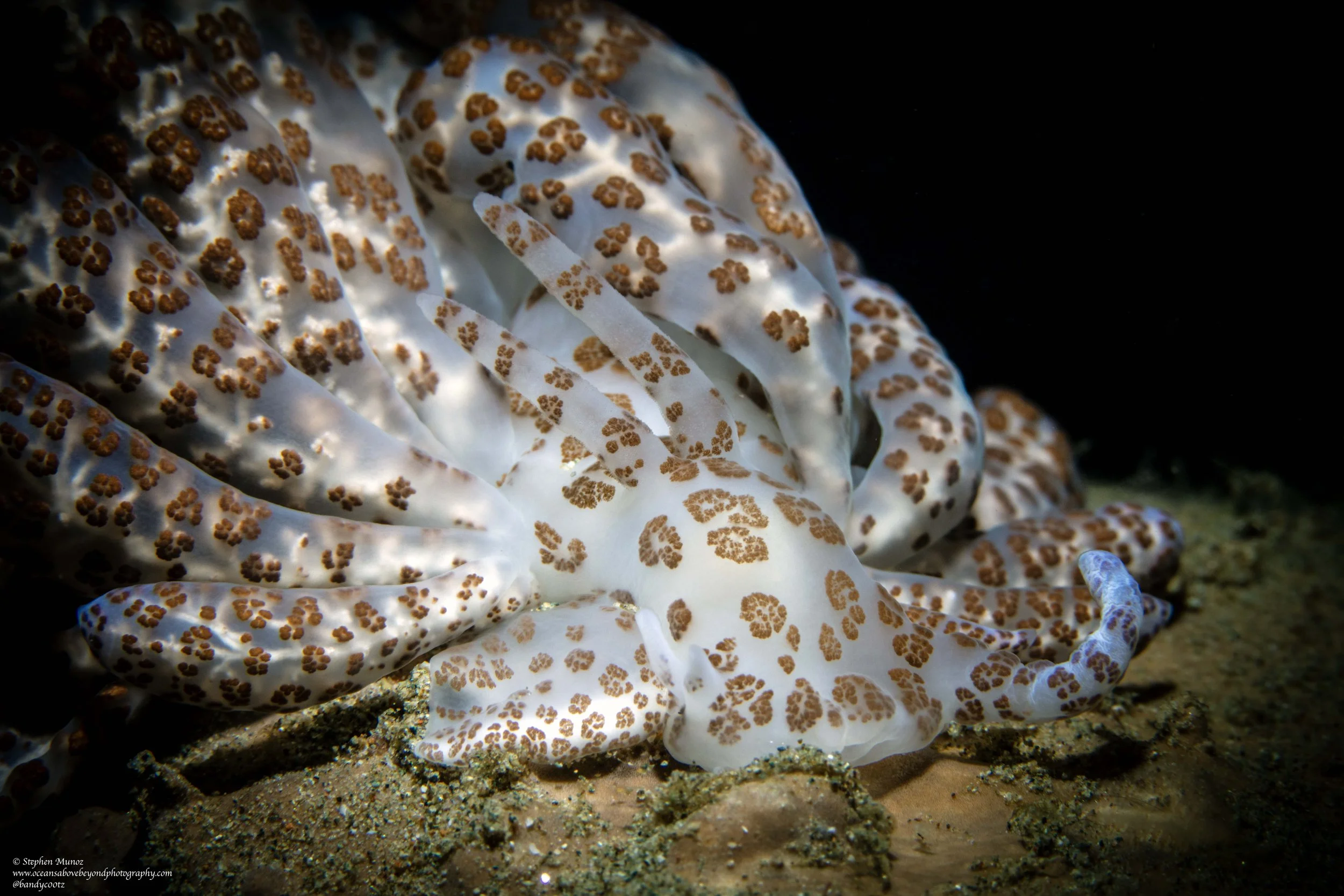
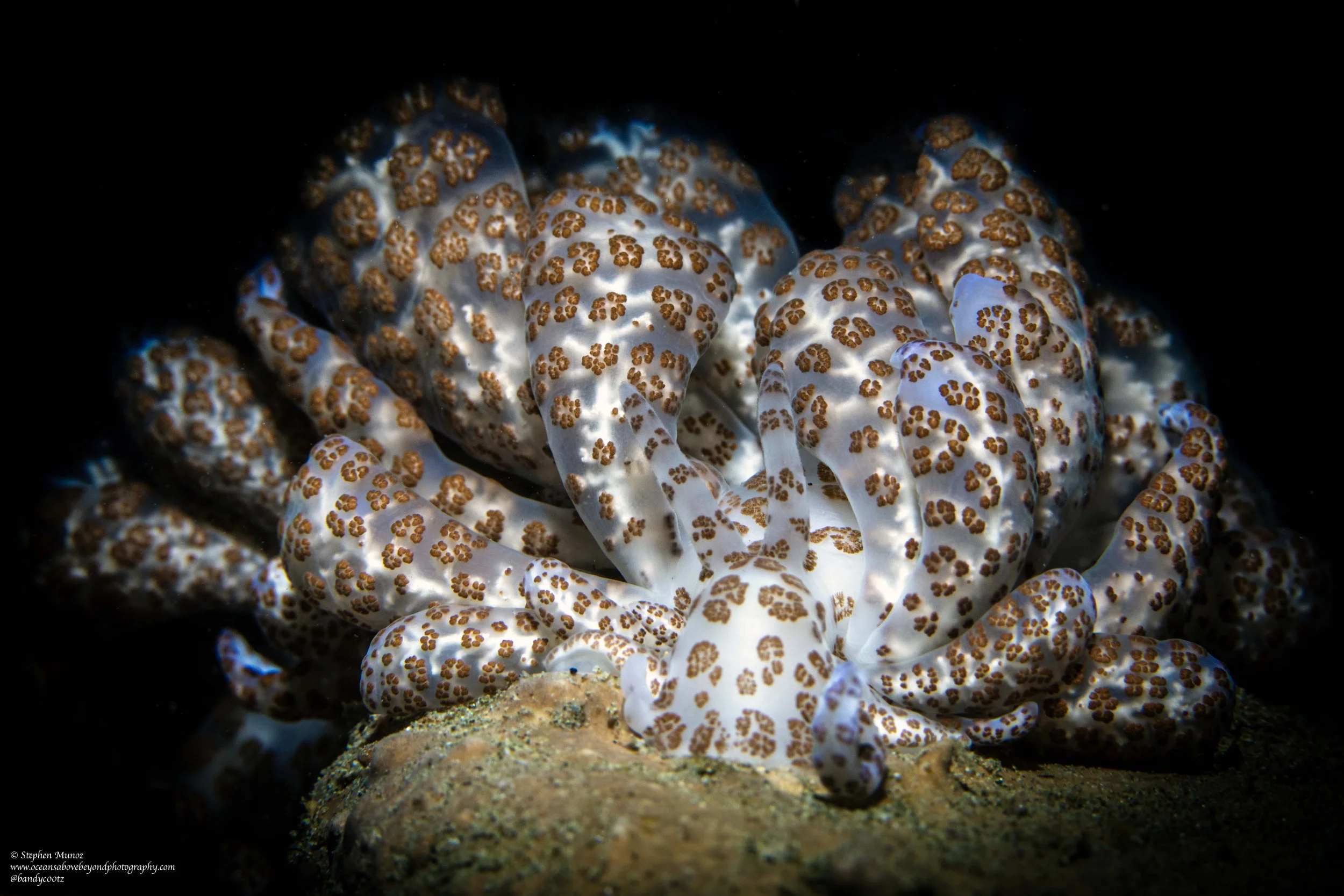
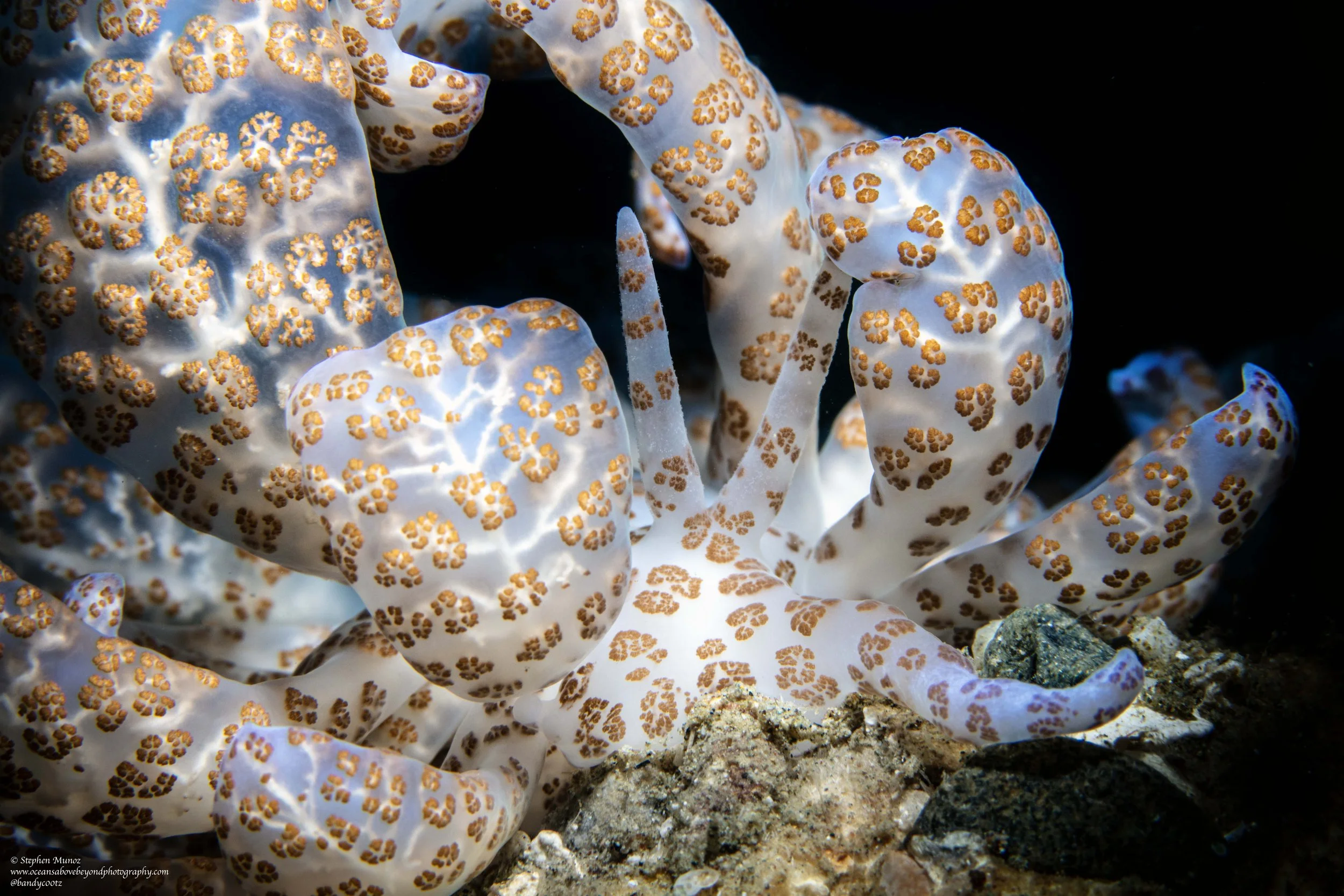
Phyllodesmium longicirrum
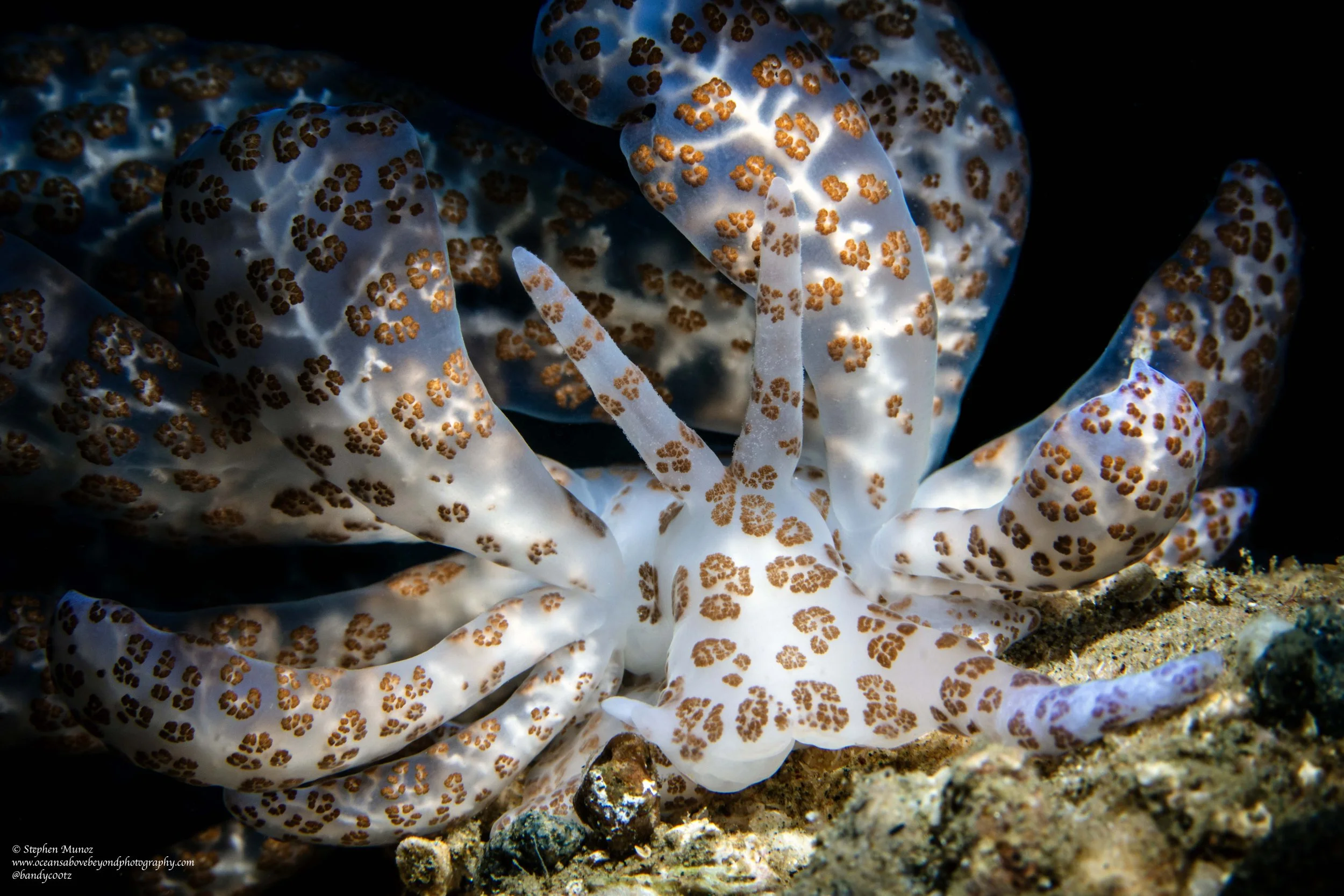
Phyllodesmium longicirrum
Images taken at Ambon, Indonesia
The Phyllodesmium longicirrha is a species of aeolid nudibranch that can be identified taxonomically by several distinctive anatomical characteristics typical of nudibranchs in the family Facelinidae.
The body is elongated and soft with a clearly defined head and tail region. Along the back are numerous finger-like projections called cerata that extend outward from the body. In this species the cerata are long and slender, forming clusters along the sides of the body and giving the animal a feathery appearance.
The cerata contain extensions of the digestive gland and are used for both respiration and digestion. In species within the genus Phyllodesmium, the cerata are also adapted to house symbiotic zooxanthellae, allowing the animal to obtain additional energy from photosynthesis.
The head has two prominent sensory tentacles called rhinophores. These rhinophores are smooth and elongated and are used to detect chemical cues in the water that help the nudibranch locate prey and suitable habitat.
At the front of the head are a pair of oral tentacles that are longer than the rhinophores. These tentacles assist in sensing the environment and guiding the animal while it moves across the reef substrate.
The skin is generally translucent to brownish in colour and may contain scattered pale or white markings. The coloration often resembles the soft corals or hydroids on which the animal feeds, providing effective camouflage in reef environments.
These anatomical characteristics, including the elongated body, clustered cerata containing digestive extensions, long oral tentacles, and smooth rhinophores, are used by researchers to identify Phyllodesmium longicirrha among Indo-Pacific nudibranch species.