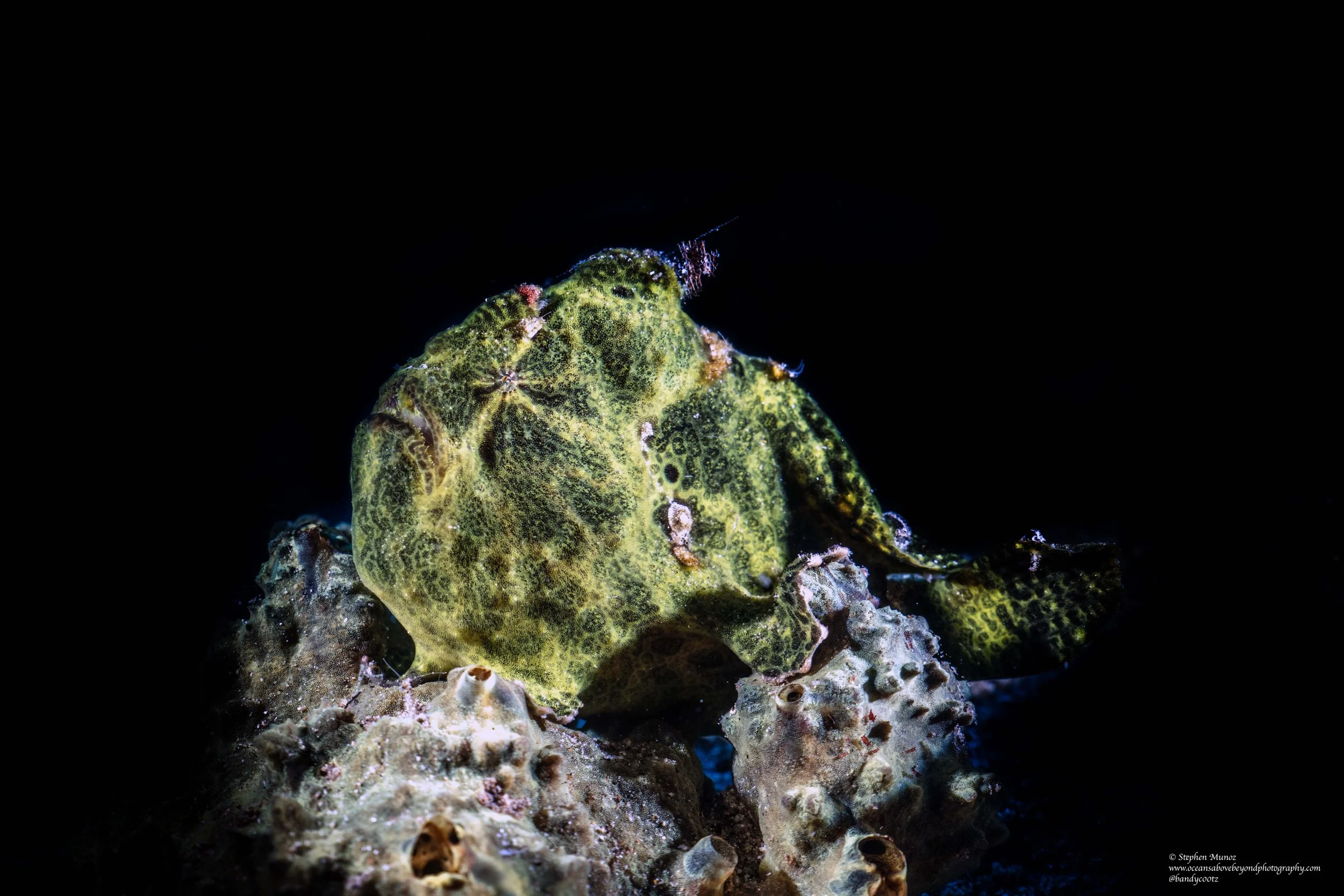
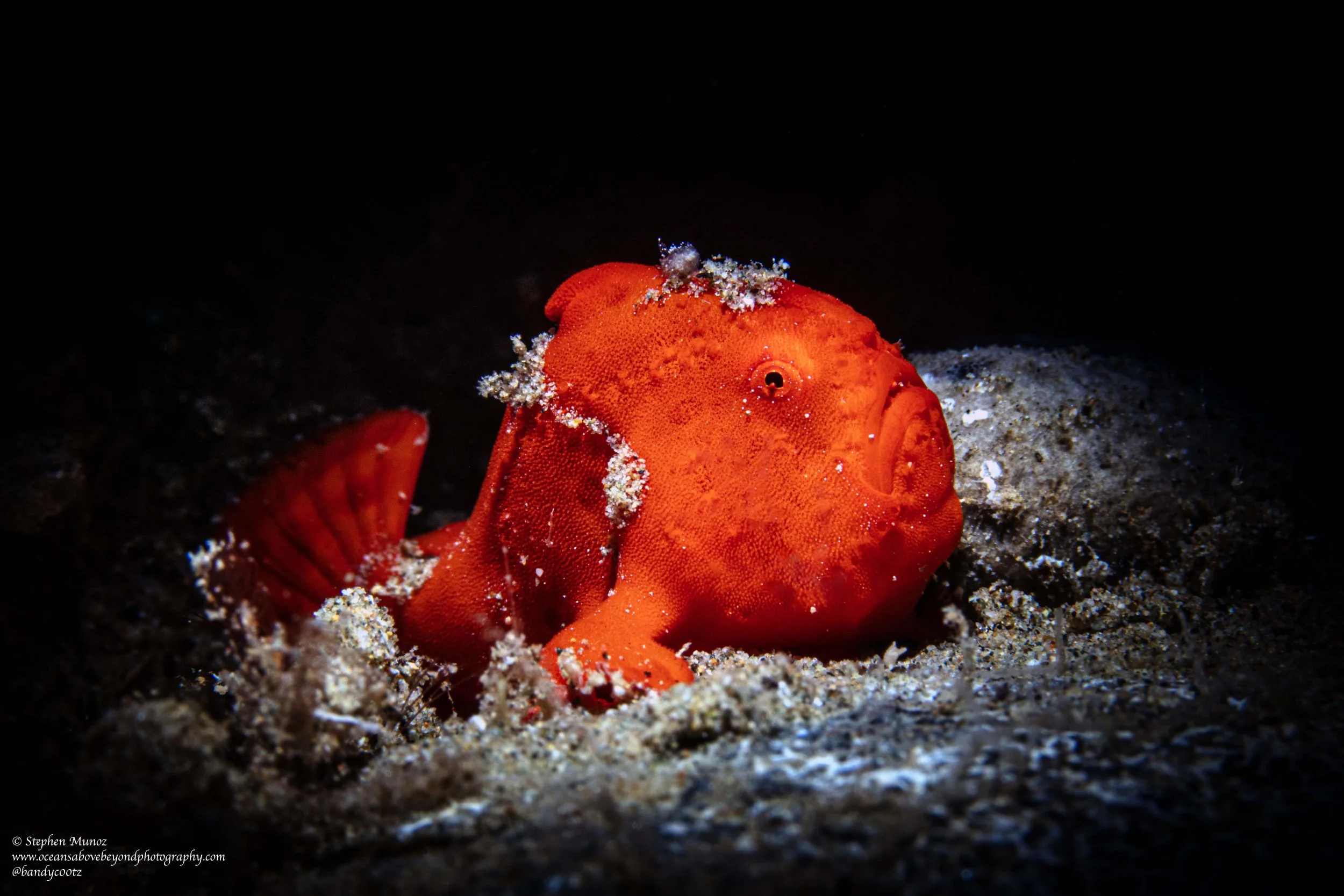
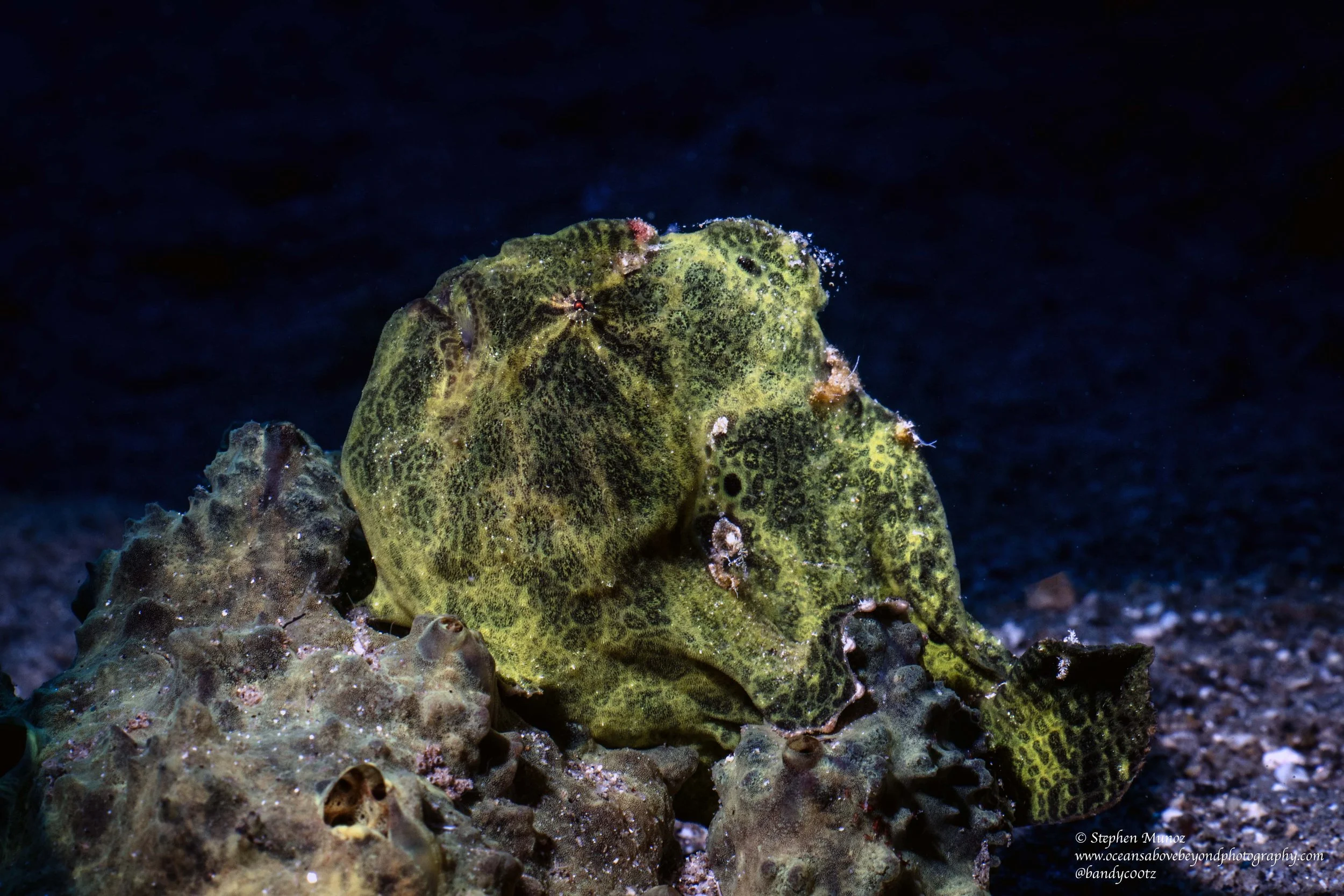
Painted Anglerfish
(Antennarius pictus)
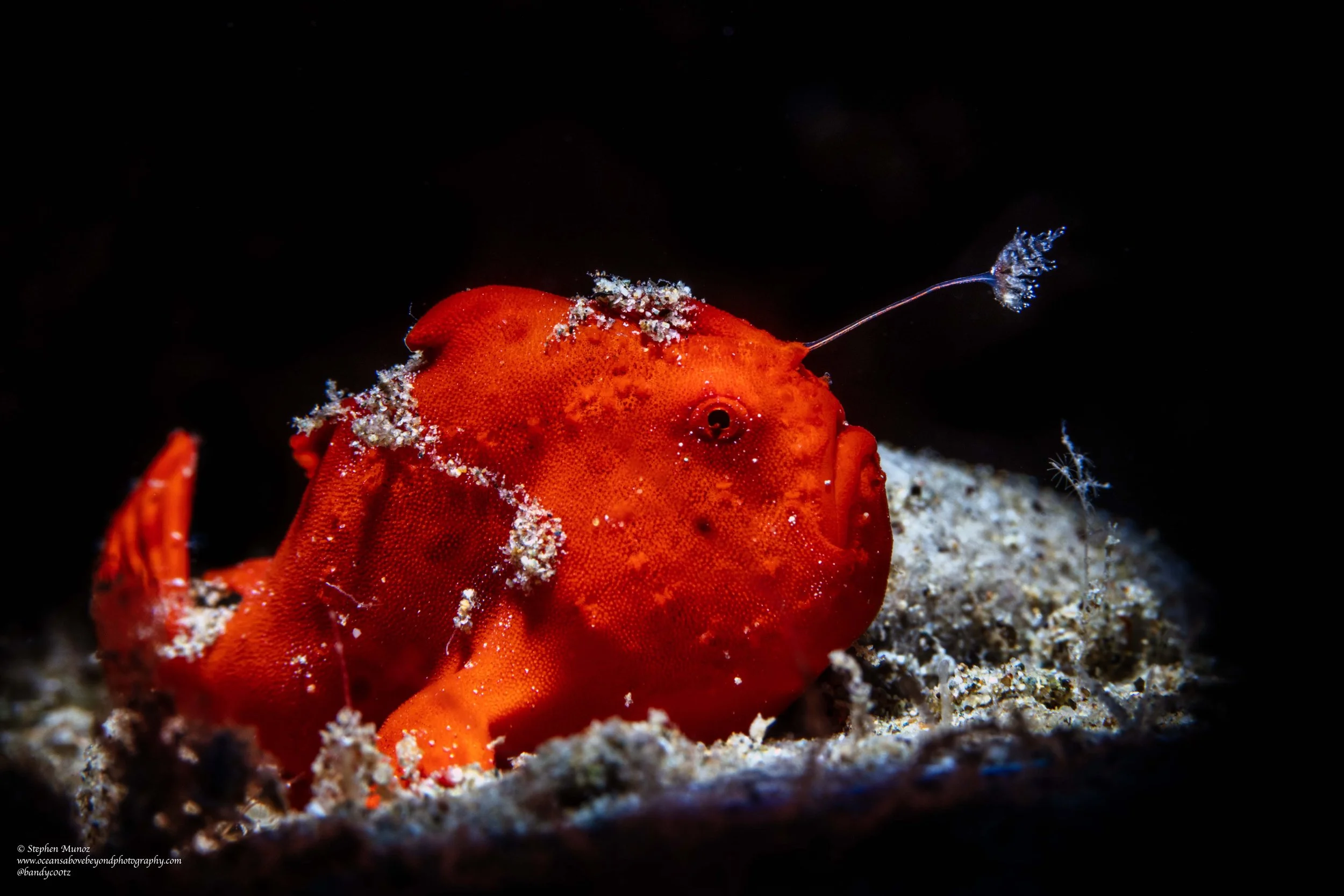
Painted Anglerfish (Antennarius pictus)
Images taken at Chowder Bay and Bare Island, NSW, Australia; Bali and Ambon, Indonesia
Key Taxonomic / Morphological Identifiers
1. Illicium (Fishing Rod) and Esca (Lure)
Illicium (first dorsal spine) is short to moderate length. Esca (lure) often resembles a small tufted worm or cluster of filaments. Lure is simple and compact, not leaf-like.
This lure shape helps distinguish it from other frogfish species.
2. Skin Texture
The body surface is covered with warts and dermal spinules.
Skin appears rough and granular., Numerous small wart-like bumps scattered across the body. May have short dermal appendages but usually not long filaments.
3. Body Shape
Globose, compressed body typical of frogfish. Large upturned mouth capable of extreme expansion. Head accounts for nearly half of body length.
4. Pectoral Fin Structure (Walking Fins)
Frogfish use modified pectoral fins to “walk”.
Arm-like pectoral fins, Elbow-like joint, Used to crawl across reef substrate
5. Colour Pattern
Colour is highly variable but typically shows:
Irregular blotches or marbling, often blue, yellow, orange, brown, or black, Pale saddle patches on the body, Blue or white spotting common
This camouflage allows it to mimic sponges or tunicates.
6. Fin Ray Counts
Dorsal fin rays: ~11–12, Anal fin rays: ~7–8, Pectoral rays: ~10–11
7. Gill Opening Position
Very small round gill opening located behind the pectoral fin base
8. Habitat
On sponges, among soft corals, on reef rubble and In Indo-Pacific coral reefs