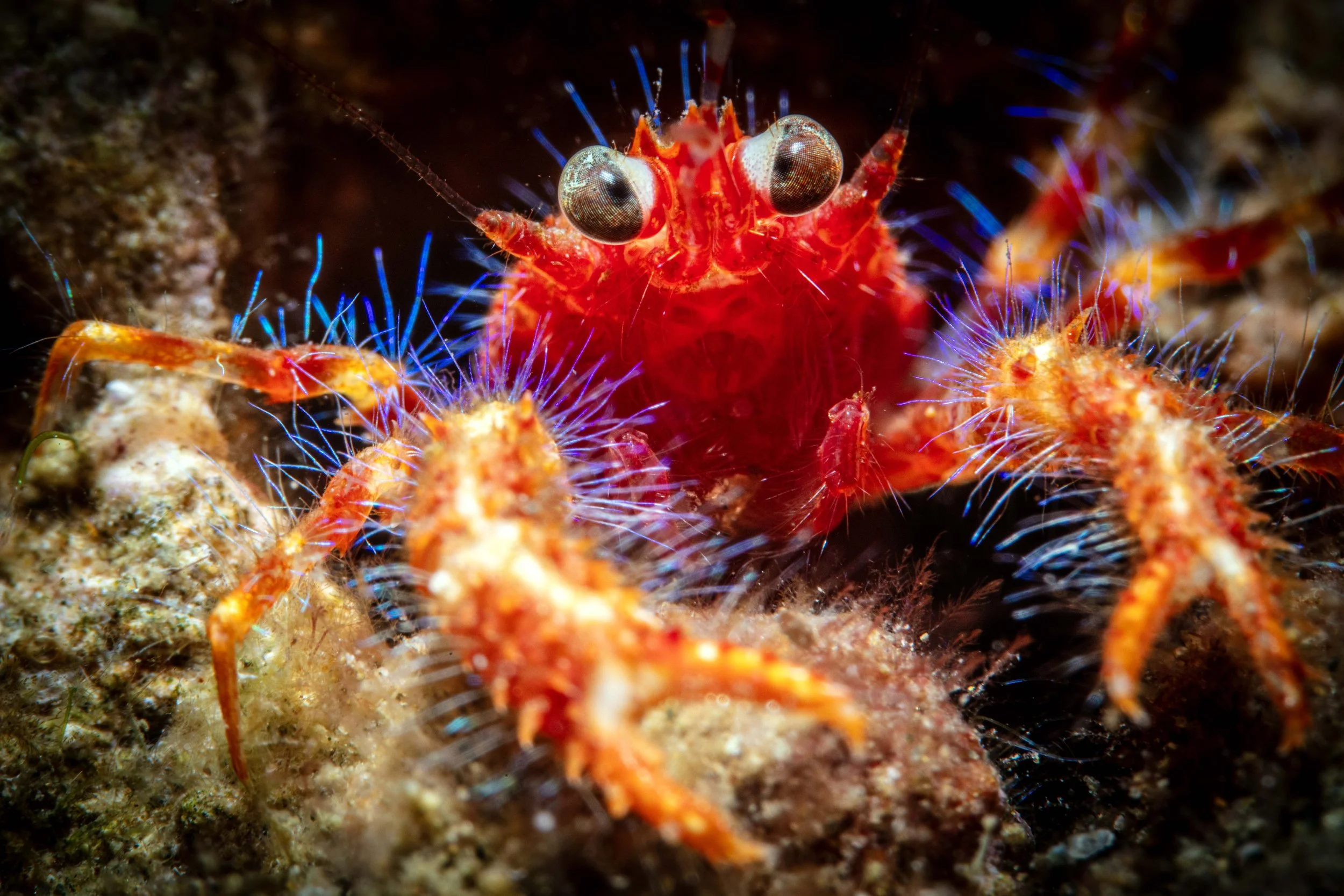
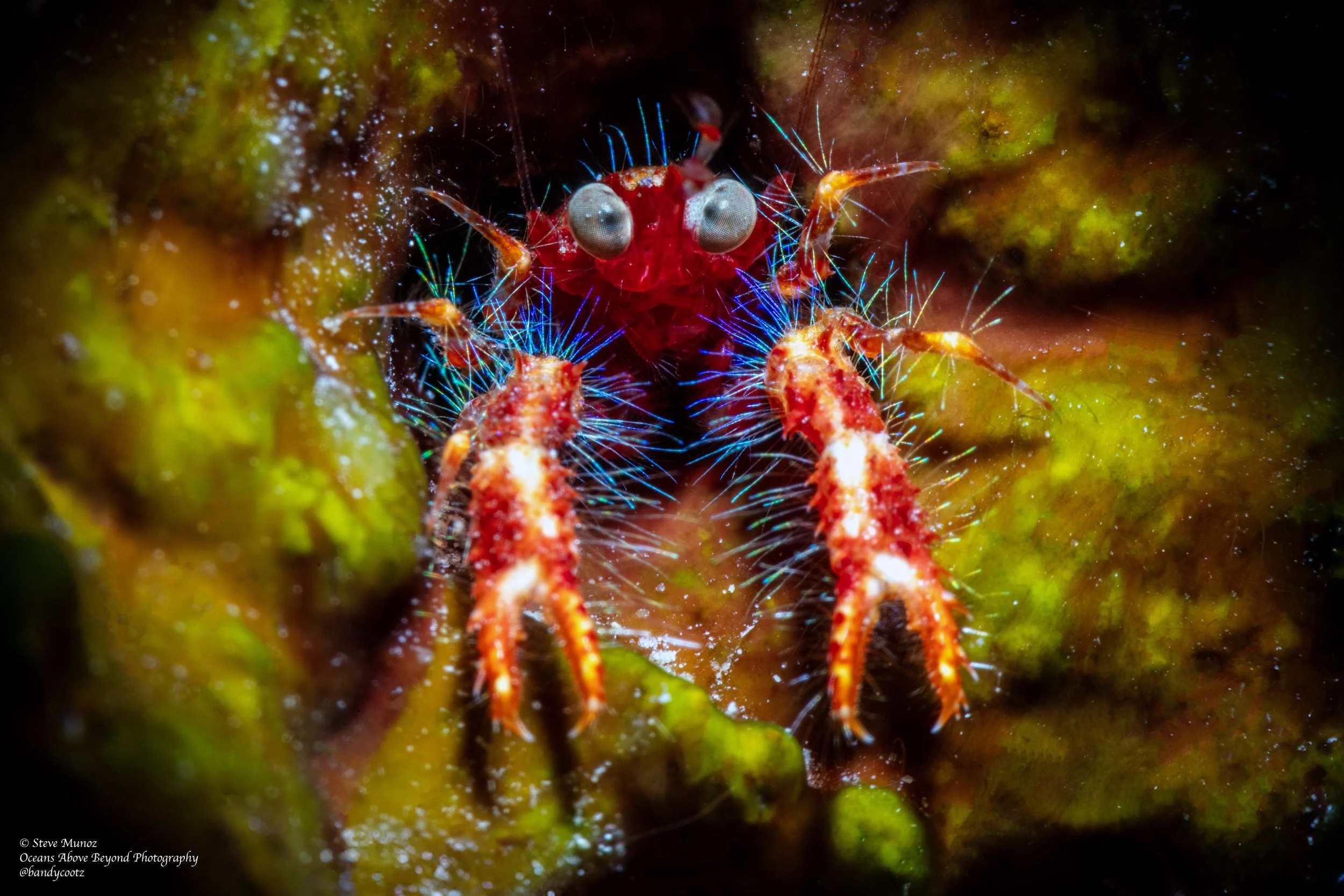
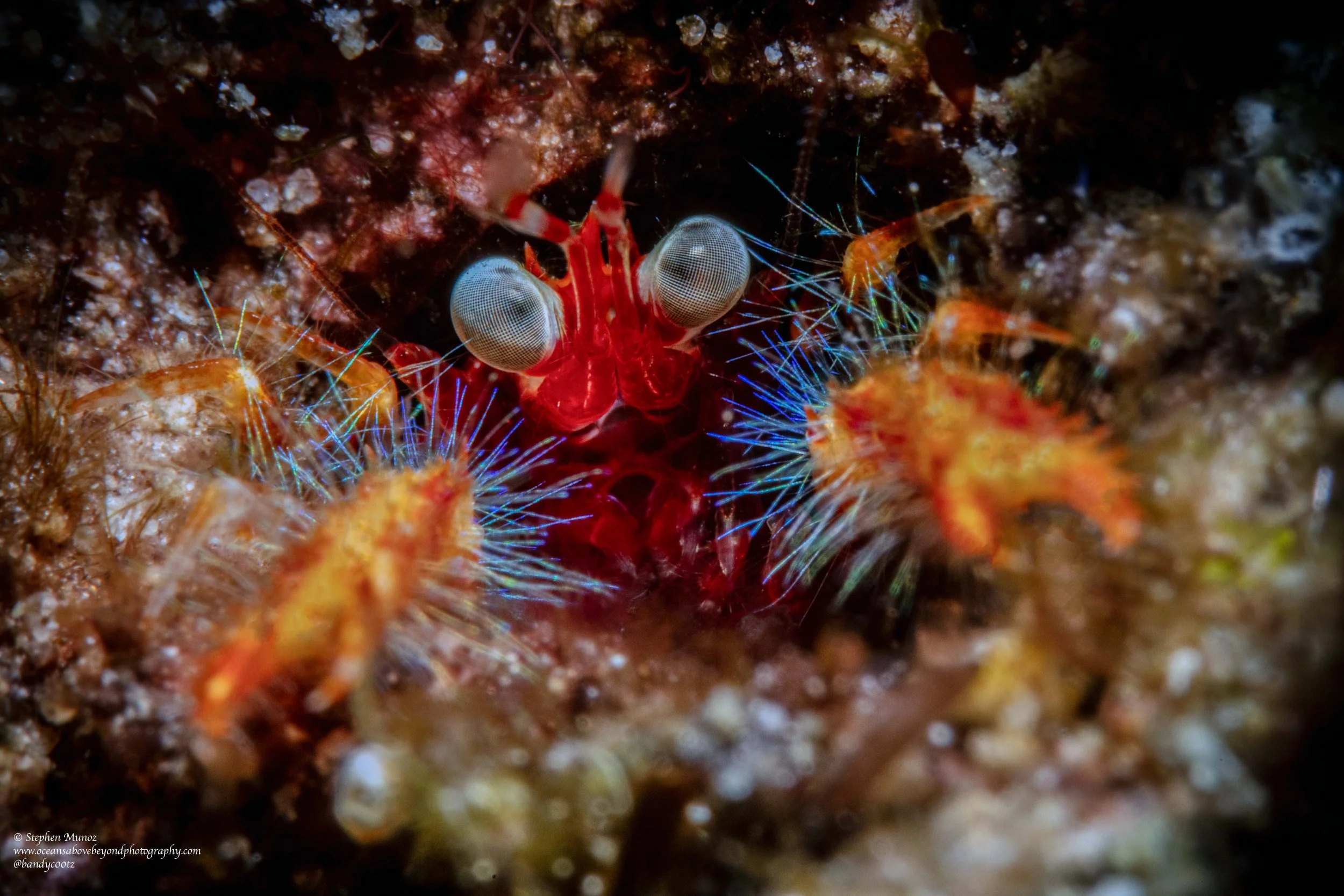
Olivar’s Squat Lobster
(Munida olivarae)

Olivar’s Squat Lobster (Munida olivarae)
Images taken at Romblon, Philippines and Ambon, Indonesia
1. Carapace Structure
Elongated carapace with a slightly convex dorsal surface.
Covered with distinct transverse ridges and small spines.
Presence and arrangement of epigastric and branchial spines are important diagnostic characters.
2. Rostrum (Front Spine)
A long, narrow rostrum projecting forward from the carapace.
Typically flanked by supraorbital spines.
The length relative to the carapace and eye stalks helps differentiate species.
3. Chelipeds (Clawed Legs)
Very elongated first pair of legs (chelipeds), often several times the body length.
Slender claws with fine spines and setae.
Relative proportions of the merus, carpus, and propodus segments are diagnostic.
4. Walking Legs (Pereiopods 2–4)
Long and thin with spines along the margins.
Terminal segments often curved with a sharp dactylus.
5. Abdominal Segments
Smooth to lightly ridged tergites.
Segmental spine patterns are used for species identification.
6. Coloration (when alive)
Often reddish to orange with pale banding typical of many Munida.
Colour pattern can support identification but is less reliable than morphology.
7. Size
Generally small (a few centimetres carapace length), consistent with many squat lobsters.