Flamboyant Cuttlefish
(Metasepia pfefferi)

Flamboyant Cuttlefish (Metasepia pfefferi)
Images taken at Lembeh, Indonesia
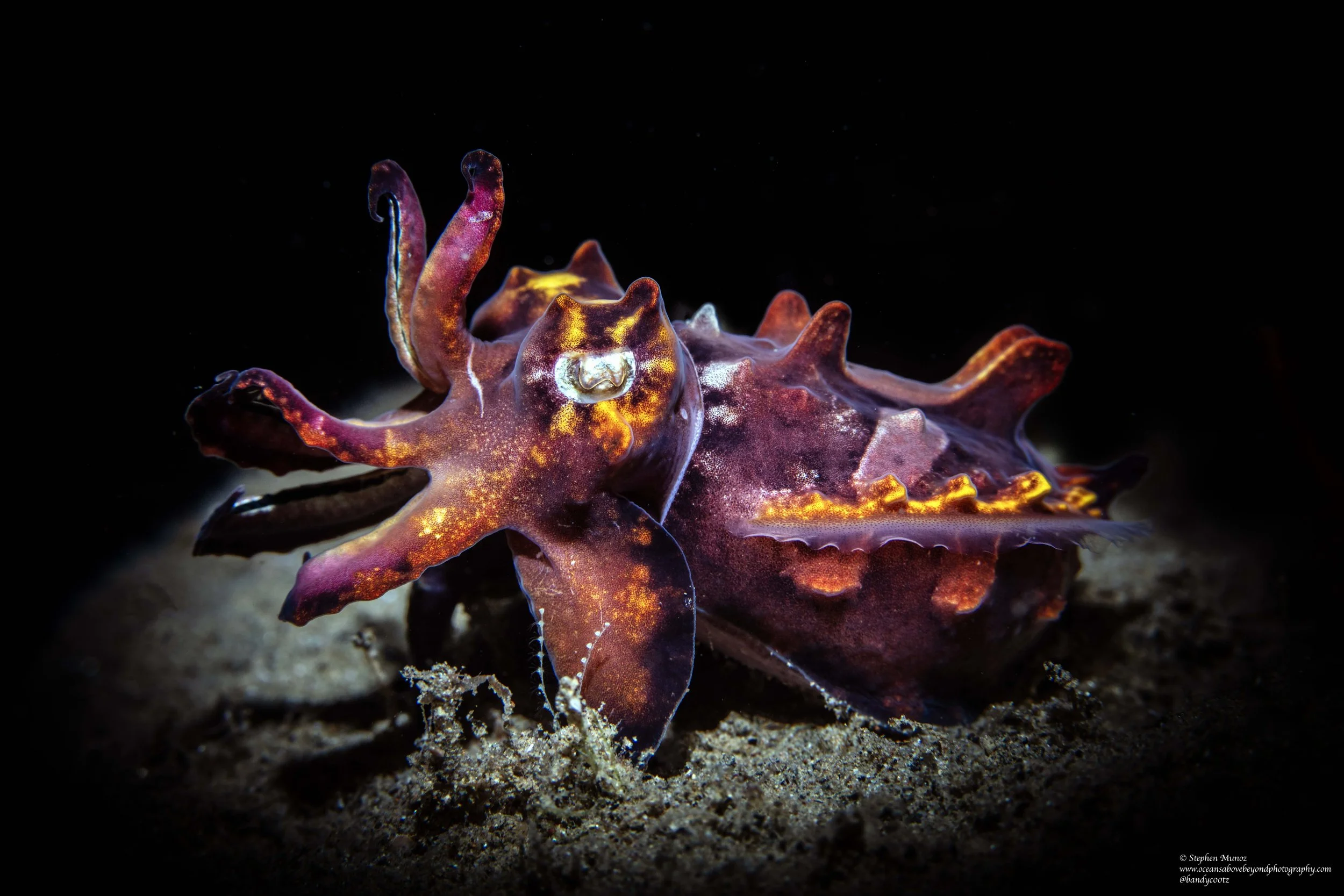
The Flamboyant Cuttlefish can be identified taxonomically by several distinctive anatomical characteristics. The body has a short, broad mantle that is flattened in shape, with a narrow fin running continuously around the edge of the mantle. This fin is used for slow hovering movements rather than fast swimming.
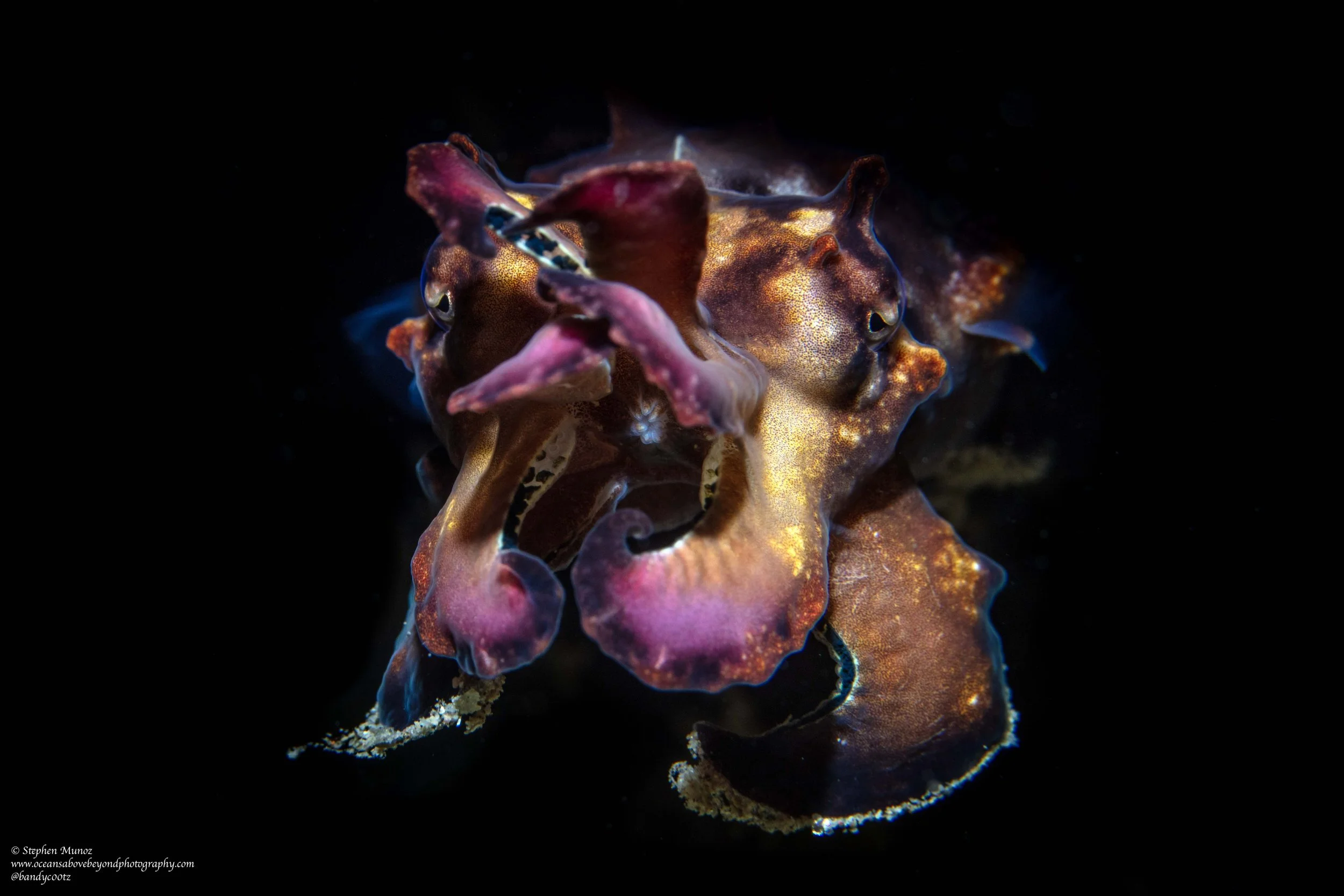
The arms are relatively short and thick compared with many other cuttlefish species. Like all cuttlefish, it possesses eight arms and two retractable feeding tentacles, and the arms contain rows of suckers used for capturing prey.
The skin has large raised papillae that allow the animal to change the texture of its body surface. These structures help it blend into sandy or rubble habitats when it is not displaying warning colours.
Inside the mantle is a small, calcified cuttlebone that helps regulate buoyancy. The cuttlebone shape is characteristic of the genus Metasepia and is used by taxonomists to distinguish it from other cuttlefish in the family Sepiidae.
Unlike most cuttlefish, this species frequently moves by walking along the seafloor using its arms rather than swimming. This unusual locomotion is a behavioural trait commonly associated with Metasepia pfefferi.
The species is also known for its vivid warning colouration, displaying bright combinations of purple, yellow, white, and red. These colours are produced by specialized pigment cells called chromatophores and signal that the animal is toxic to potential predators.