Blue Ringed Octopus
Hapalochlaena Sp.
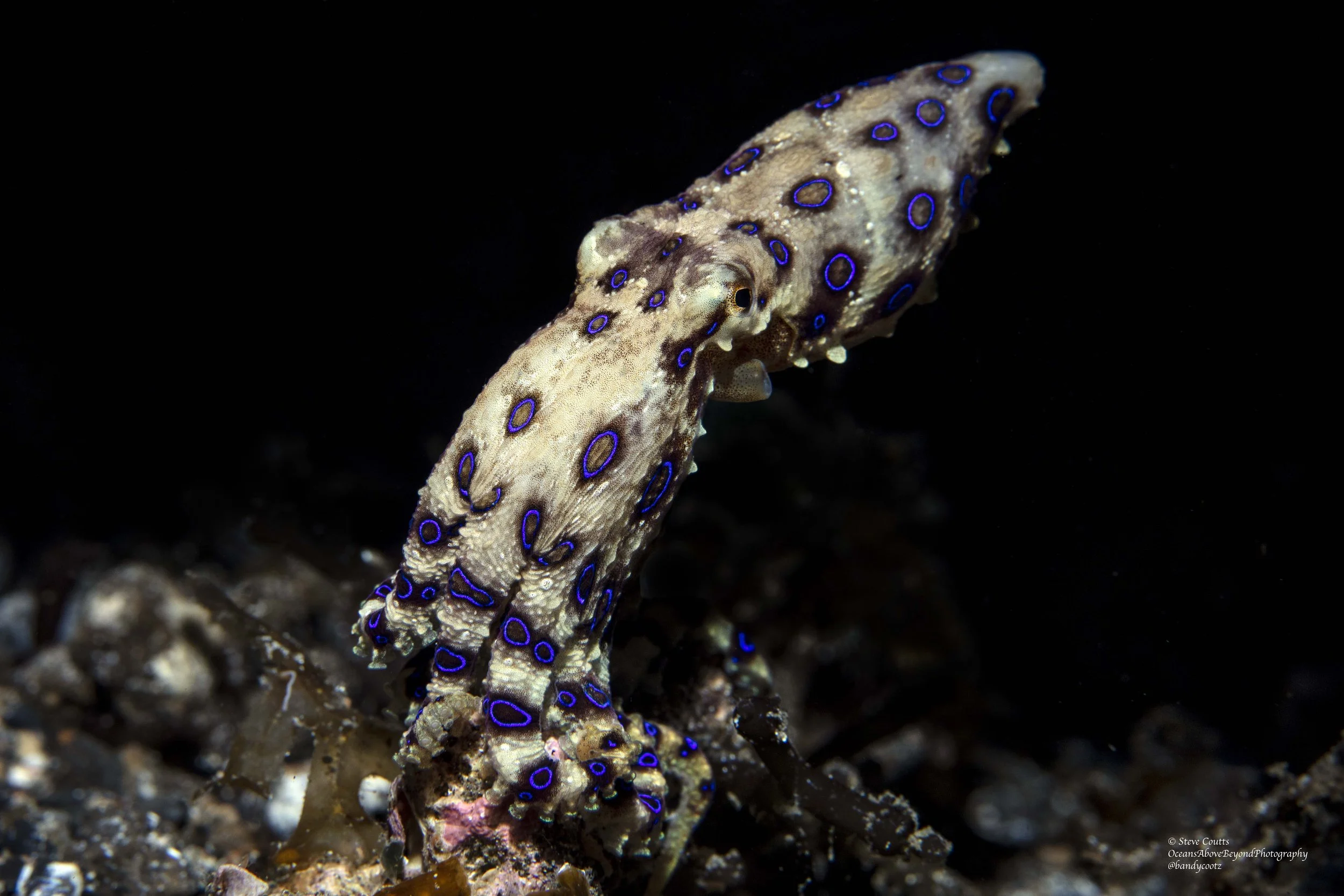
Blue Ringed Octopus (Hapalochlaena Sp.)
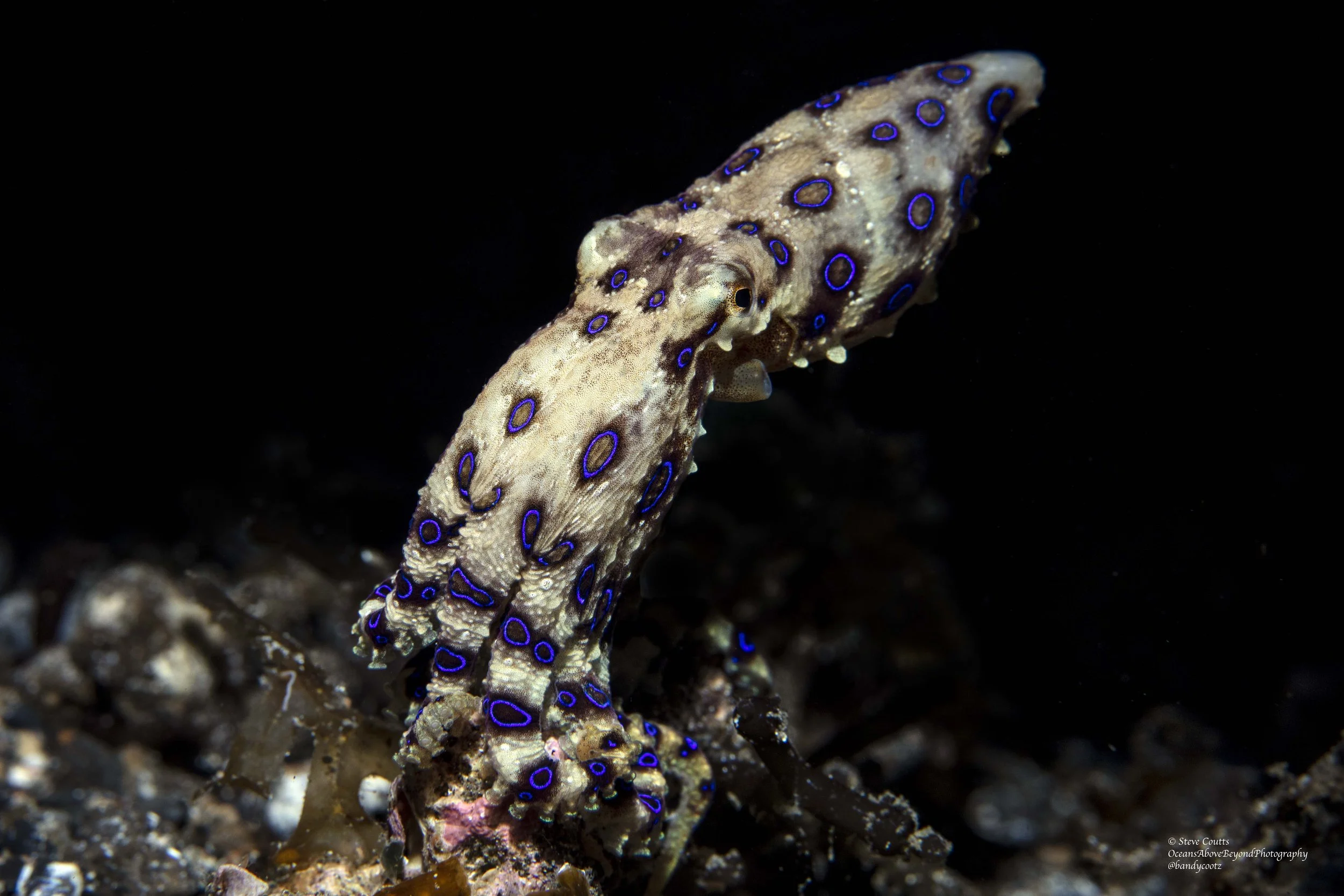
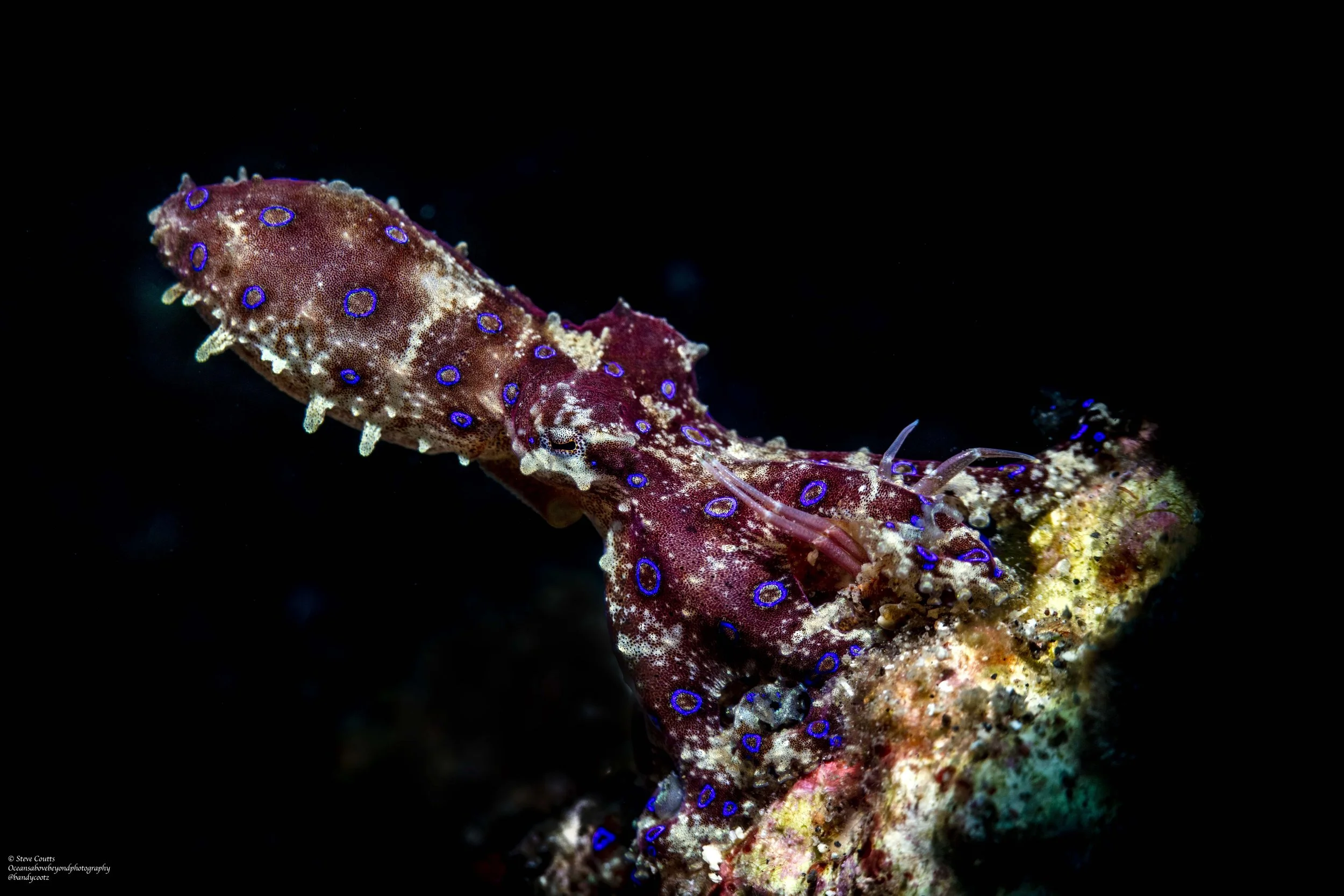
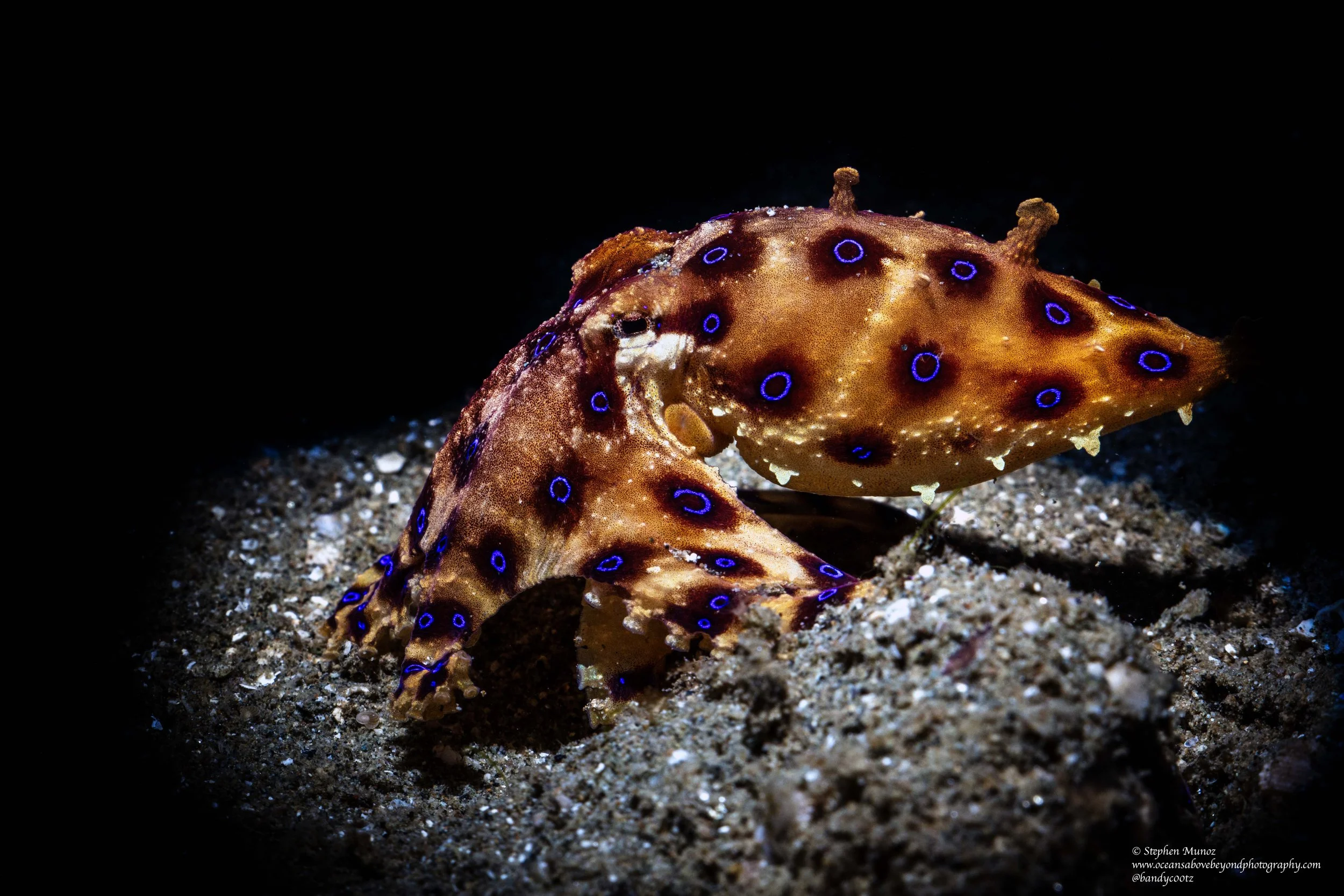
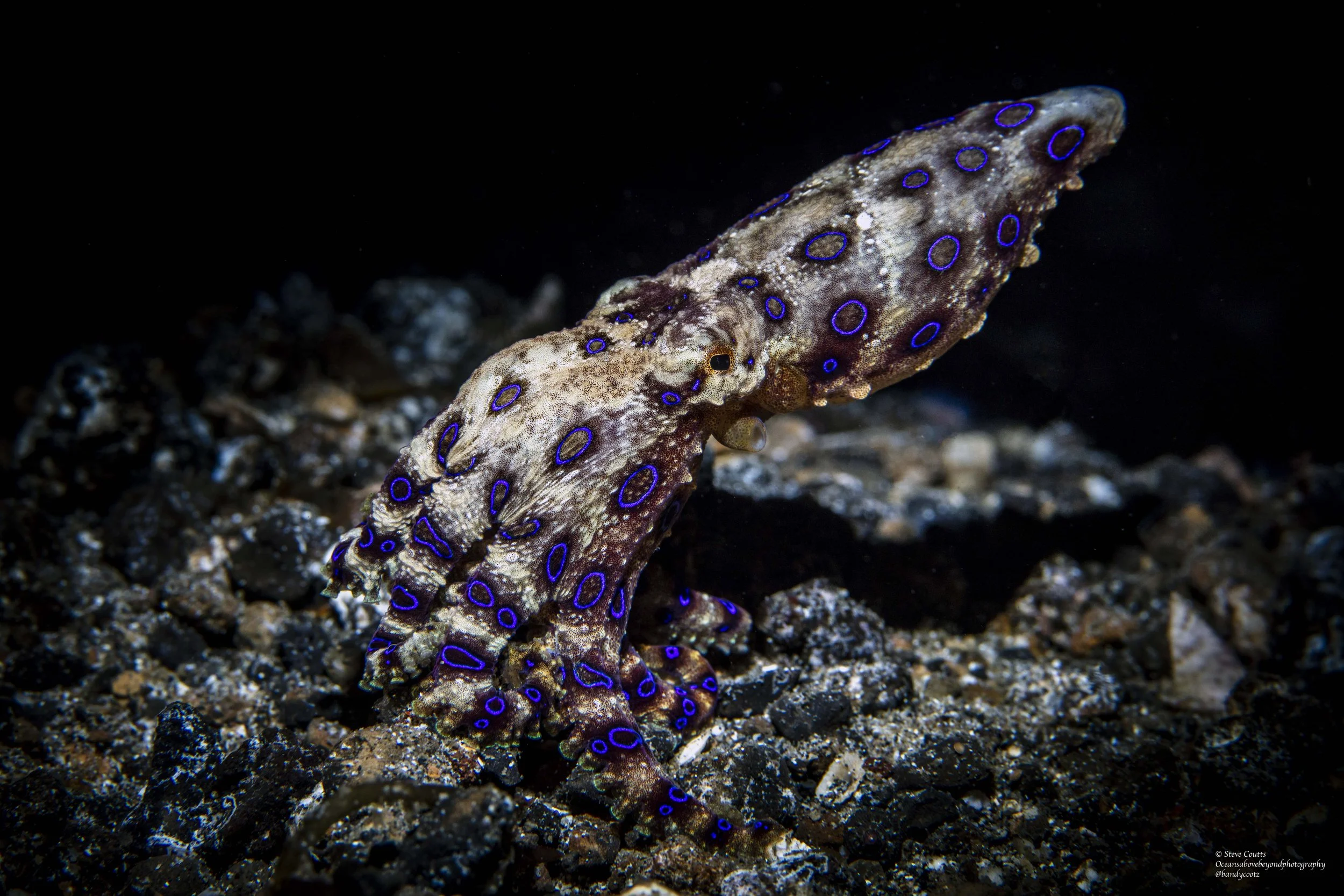
Images taken at Lembeh, and Ambon, Indonesia
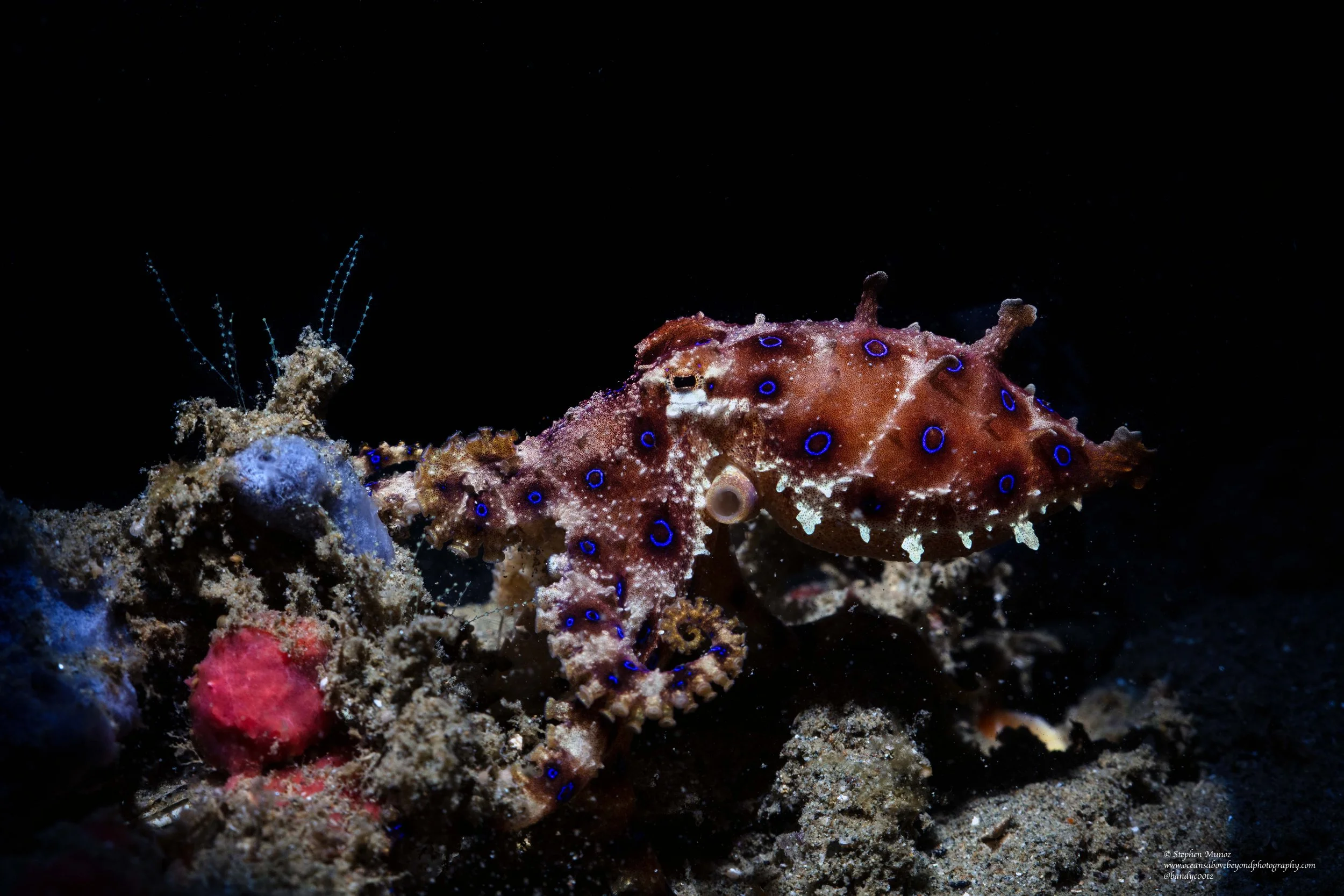
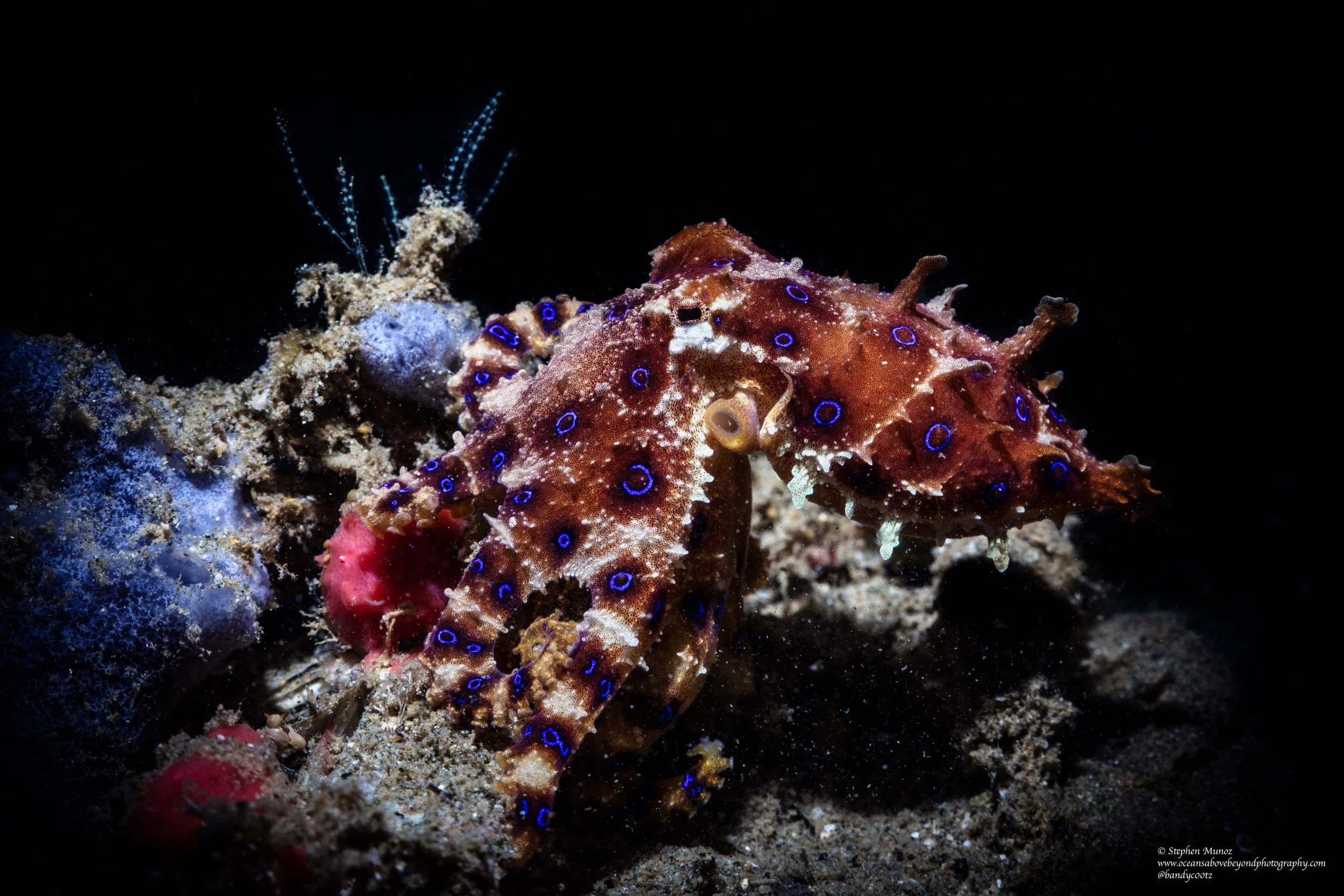
The Hapalochlaena species found in Indonesia are commonly referred to as blue-ringed octopuses, a group of small but highly venomous octopuses within the family Octopodidae. In Indonesian waters, individuals are often identified only to genus level as Hapalochlaena sp. because several closely related species occur and can be difficult to distinguish without detailed examination.
The body has a small, rounded mantle that is smooth and compact compared with the length of the arms. The mantle connects to eight relatively short arms that are thick and muscular, allowing the animal to crawl effectively across reef substrate and through small crevices.
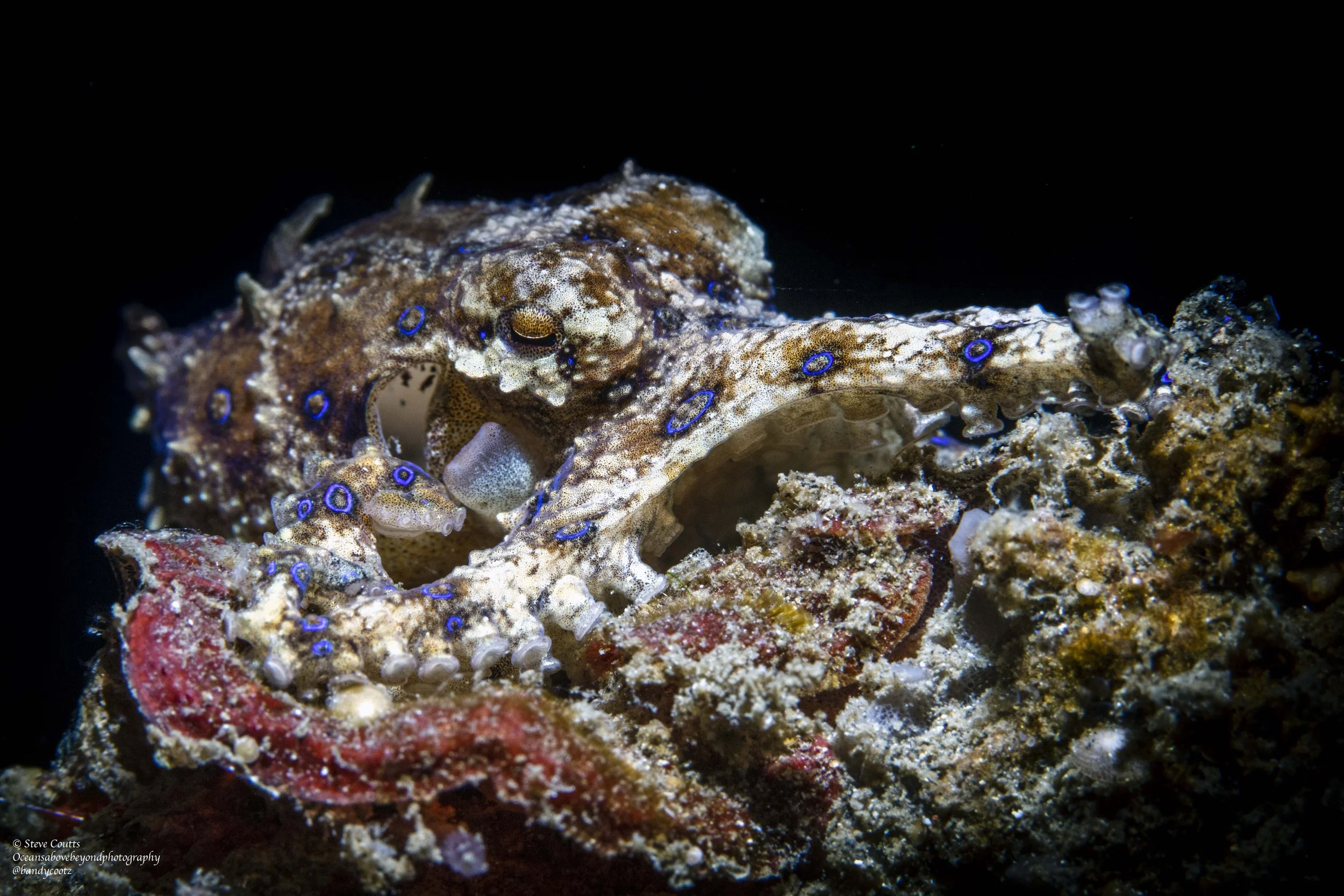
The arms contain two rows of suckers along their length, which are used to grasp surfaces and capture prey such as small crustaceans. The arms are generally shorter and thicker than those of many other reef octopuses, giving the animal a stocky appearance.
The skin contains chromatophores and iridophores that allow rapid colour changes. When the animal is disturbed or threatened, it displays bright iridescent blue rings across the mantle and arms. These rings flash against a pale yellow or tan background and act as a warning signal to predators.
The skin surface can also produce small papillae that alter the body texture, helping the octopus blend into sand, rubble, or coral environments when it is not displaying its warning colours.
The eyes are relatively large and positioned on the sides of the head, providing a wide field of vision that assists with detecting prey and potential threats in shallow reef habitats.
Internally, the animal has the typical soft-bodied structure of octopuses with no internal shell or skeleton. Movement occurs by crawling with the arms or by short bursts of jet propulsion through the siphon.
These anatomical traits, together with the characteristic flashing blue rings and compact body form, are used by researchers and divers to identify members of the genus Hapalochlaena occurring in Indonesian reef ecosystems.